Contact me!

How can design adjustments improve the experience for novice players without betraying the core "Souls-like" DNA? This study focuses on casual players who lack the established mental models and reflexes of the genre.
In this case study, I focus on novice players who, unlike experienced players, lack established mental models, reflexes, patterns specific to the Souls-like genre. For them, what is at play is not only discovering a new universe, but also facing a learning curve which can be steep for someone who's used to playing casually. The stakes then include an emotional side for the user: how do we maintain motivation in the face of repeated failure? What distinguishes the players who persevere from those who give up?
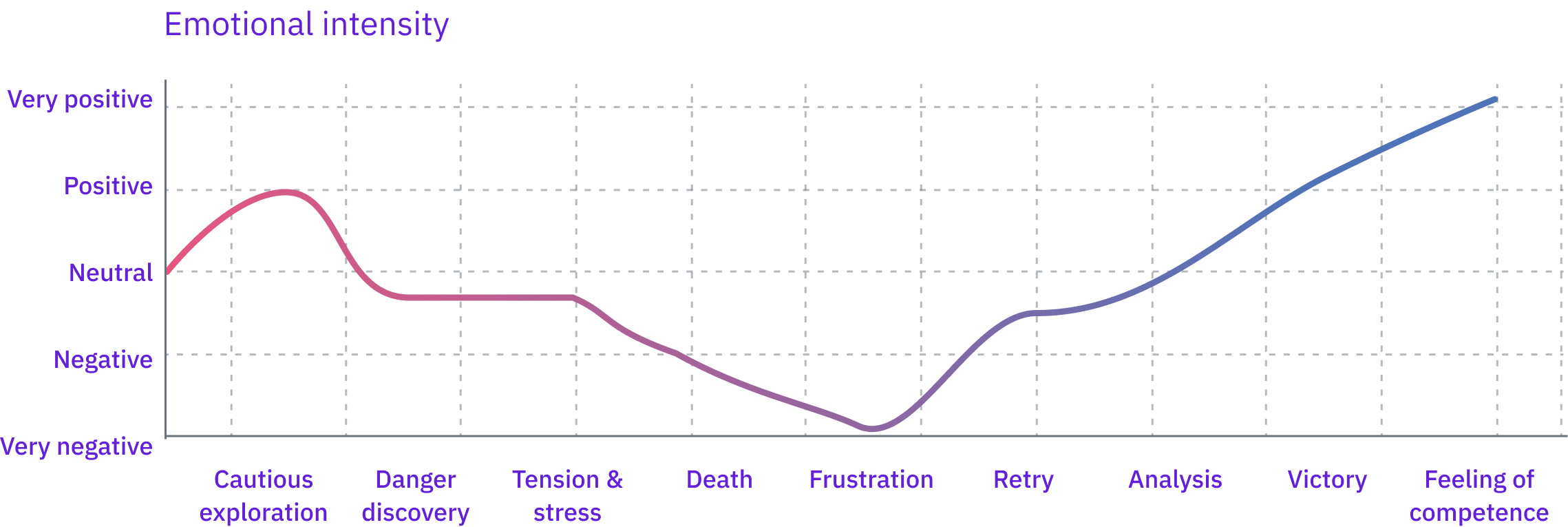
I'll focus on the emotional and sensorial aspects the user goes through during the game, while keeping in mind the different cognitive mechanisms at play.
How could some design adjustments improve the experience for novice players, while still sticking to the core principles of the Souls-like genre?

From the very beginning, Elden Ring bets on a stripped-back interface. Because the HUD is so minimalist, the user has to make a conscious effort to connect the UI elements with standard design conventions, like recognizing that red stands for health, blue for mana, and green for stamina.
While this approach avoids overwhelming novice players with a cluttered screen (referencing Bastien & Scapin’s Information Density), it also significantly reduces explicit guidance. The user has to perform an initial "cognitive lift" just to decipher their own interface.
Moreover, a discreet HUD demands more selective attention. While this definitely deepens immersion and forces a more active type of cognitive engagement, it also heightens the sense of presence. It creates a more immediate experience where the interface fades into the background, leaving the environment at the center of the player's focus.
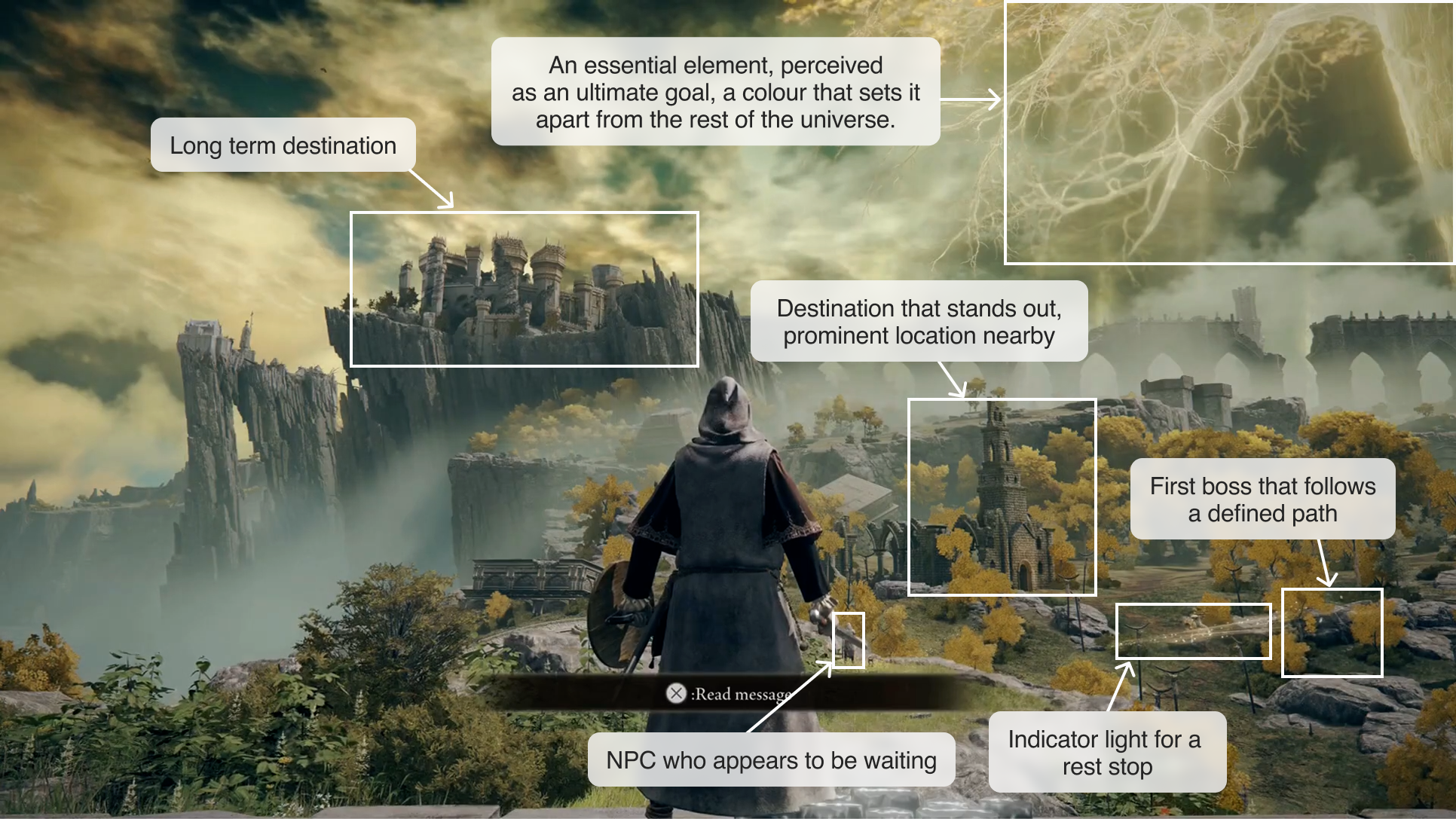
In Elden Ring, environmental cues (such as architecture, lighting, and the placement of world elements) are essential. The player is not guided with a quest log or explicitly defined objectives. Instead, it delegates this task to the environment itself, requiring the user to put in extra effort to observe and understand their surroundings.
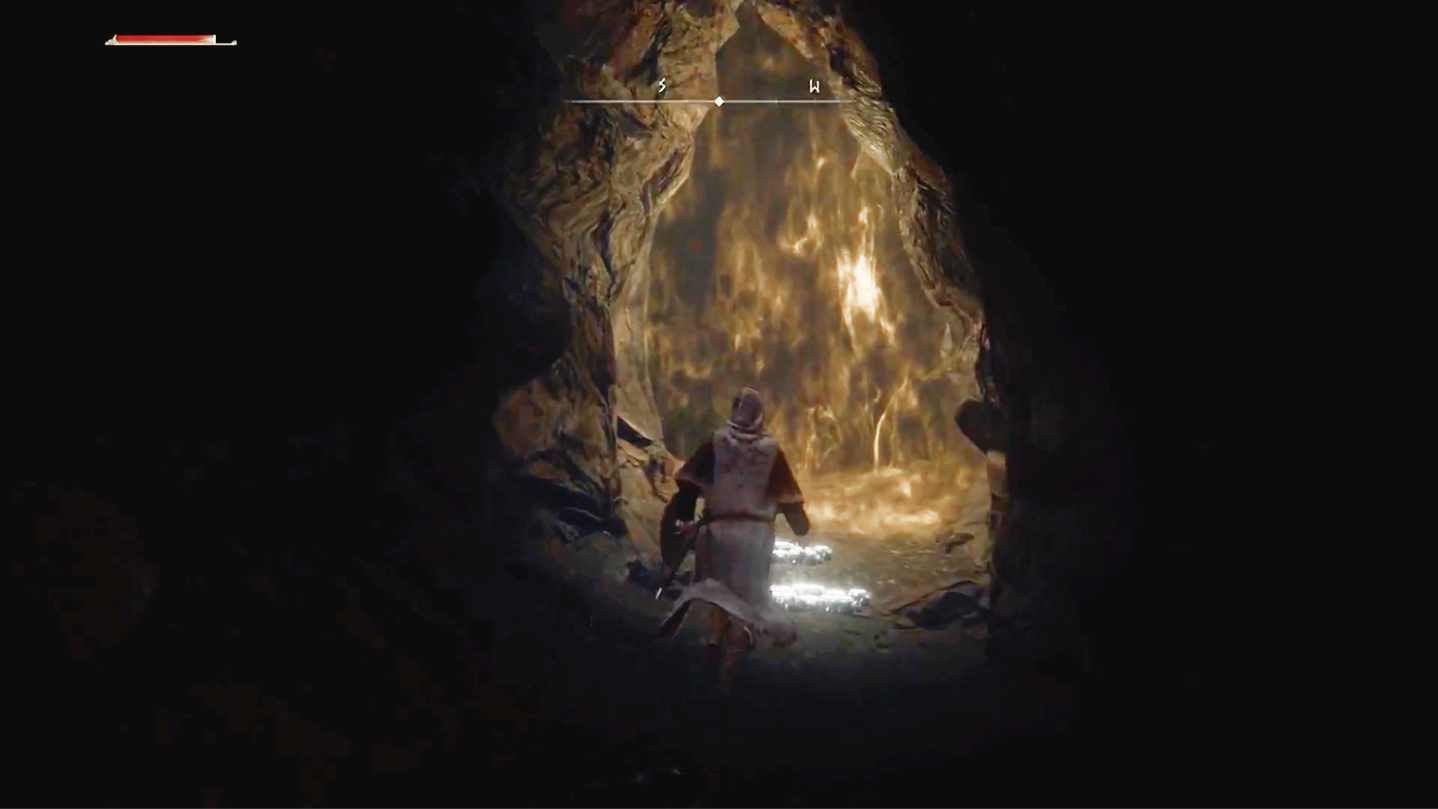
Silence is a powerful tool often found in horror games and cinema; it builds a constant sense of dread by making the player wait for something to happen. Elden Ring leans heavily into this, leveraging the human psyche’s natural conditioning to silence. From the very first seconds in-game, a tension is established that stays with the player throughout the entire journey.
The ambient silence (occasionally accompanied by very subtle music) puts the focus entirely on the character's own sound effects: walking, rolling, or interacting with the world. This creates an immediate sense of vigilance, not just toward the environment, but toward the noise the player themselves is making.
Paradoxically, sound is also a source of tension. Hearing an off-screen enemy creates a mix of anticipation and fear: the dread of being spotted or ambushed. Similarly, boss fights are marked by more intense musical scores, designed to trigger an emotional peak and heighten the fear of death.
Elden Ring also shapes the player's emotional state through strong sensory signals. The "yellow fog wall" is a prime example. Every player learns that this signal means a boss encounter. But the true strength of this UX design lies in the unknown: you cannot see through the mist. You can't prepare or analyze the threat ahead. This forces the player into a discovery phase that almost always ends in a first death, effectively launching the "die and retry" cycle.
In Elden Ring, every action feels heavy and consequential. Playing with a controller provides immediate haptic feedback creating a physical connection between the player and Elden Ring's universe (cf. Bastien & Scapin).
However, this feedback also highlights a deliberate "slowness." Every movement is tied to a long animation, opening a vulnerability window for the player:
Ultimately, the UX is built to be demanding. By design, the player is never in full control, pushing them toward a constant loss of mastery that elevates the game's sense of danger.
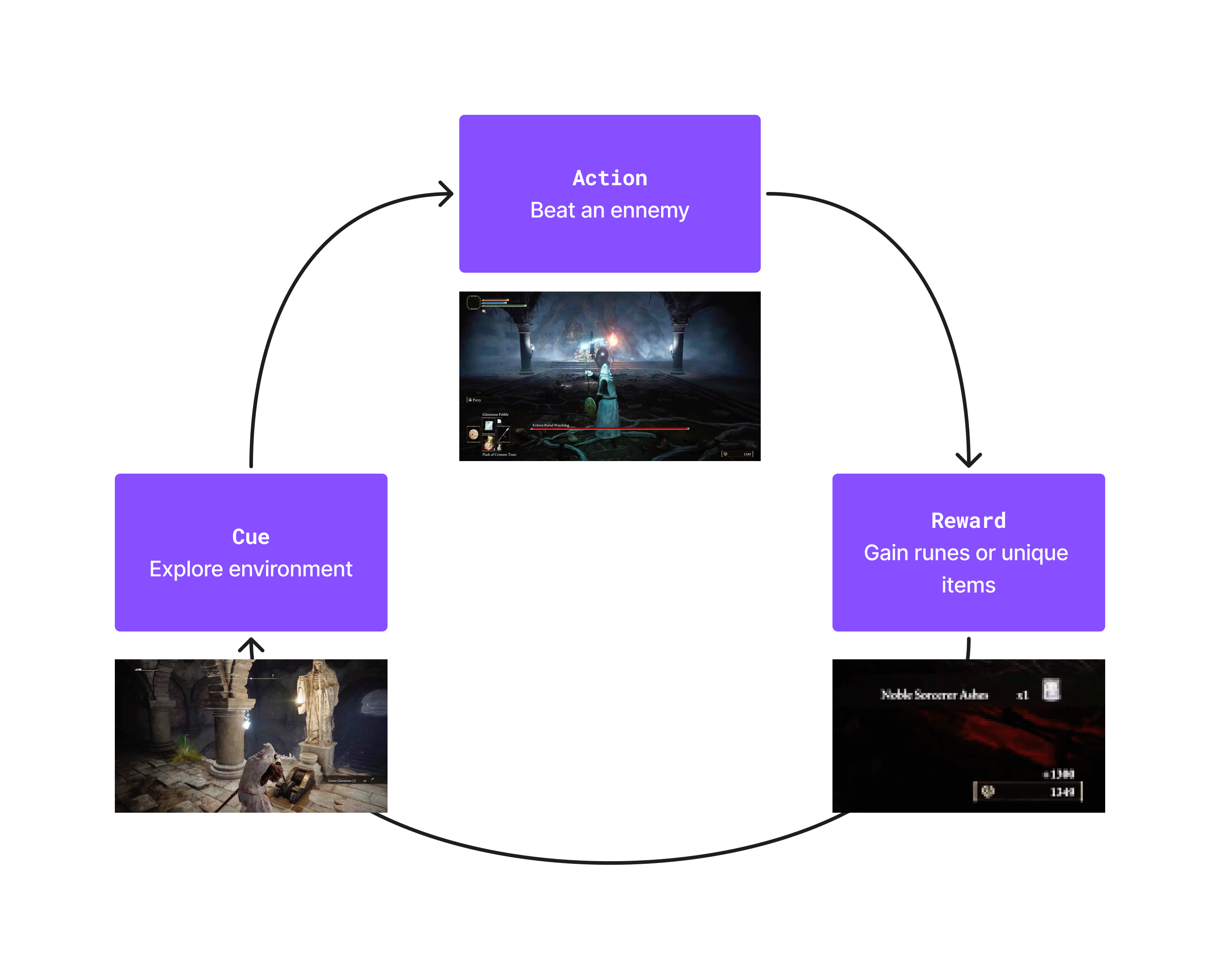
Unlike games that trivialize death, Elden Ring makes sure it remains a constant threat. The game’s UX uses loss aversion: dying means losing your "runes" (the currency used for both commerce and leveling up)
By making death a high-stakes event, the design prevents players from becoming desensitized to failure. It forces a state of constant emotional engagement and alertness. Death is not a simple "Game Over," but a deliberate mechanic used to maintain tension and keep the player fully invested in every move.
New players in Elden Ring face a massive influx of mechanics to master simultaneously: weapon scaling, enemy patterns, spatial navigation, and rune management. This creates a "foggy" sense of progression.
By overwhelming the user with information and possibilities, the game intentionally risks "choice overload," forcing the player to either experiment blindly or seek outside help.
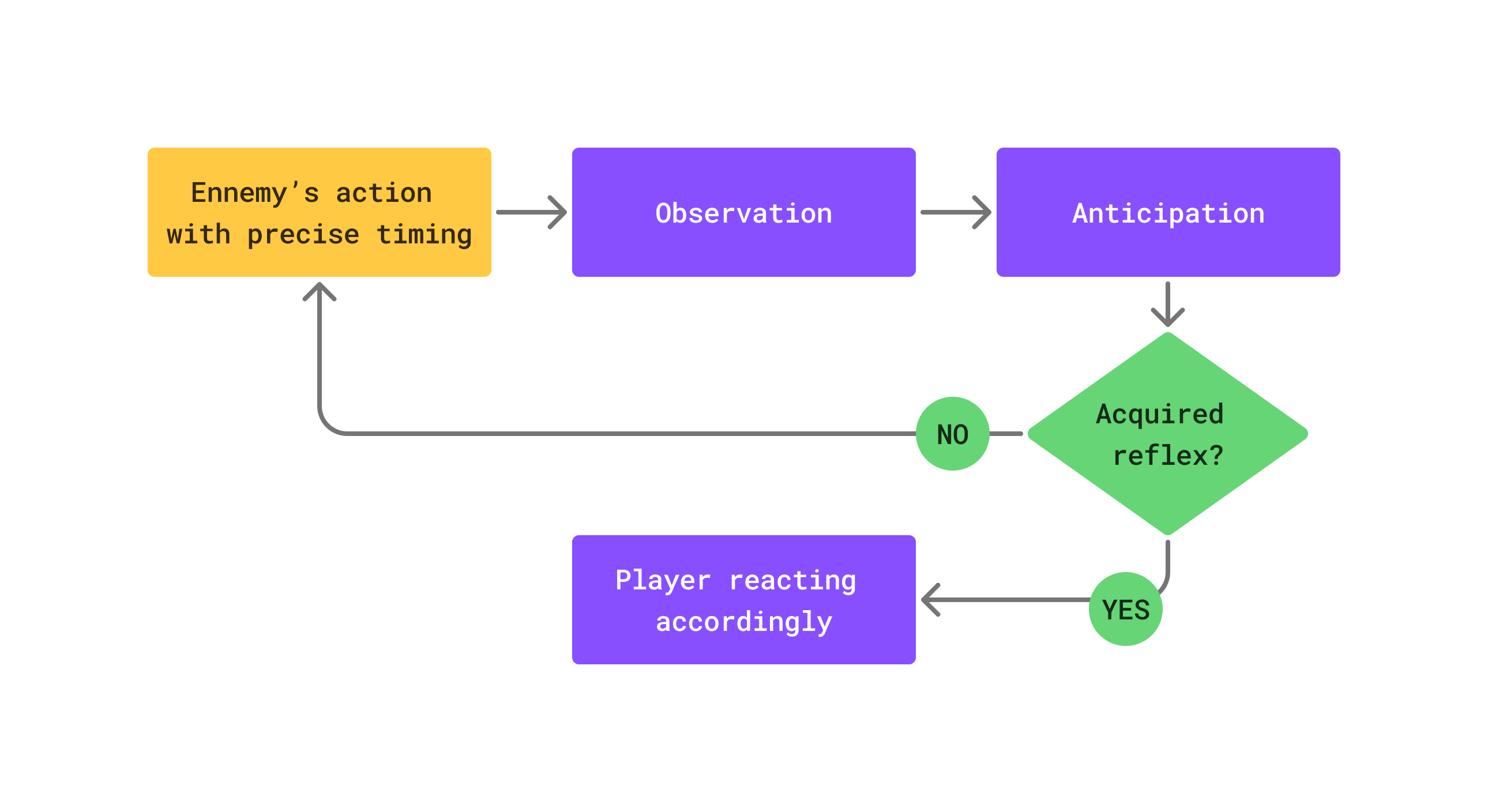
In Elden Ring, fighting is a continuous exercise in behavioral conditioning. Enemies possess sets of recurring signals posture, recoil, animation starts, and rhythmic shifts.
In Elden Ring, fights are a constant exercise in multitasking that often leads to cognitive overload for novices. The player must simultaneously
By tying every action to a limited resource (stamina), the game imposes a strict rhythm management. The player is constantly under stress.
For frustration to be accepted and tolerated, it must occur in a controlled environment; without this framework, it leads to a decline in user retention.
Based on Deci and Ryan's self-determination theory, that frustration decreases if the user feels capable of influencing the outcome: ie. through a system of statistics and skills. Elden Ring offers a system that allows the players to have a bit of control. In the game, they have the opportunity to try out different strategies and have checkpoints through grace sites, but above all, they can build their own character and increase their statistics to become more powerful.
However, there is a major sticking point here: novice or casual players may find it difficult to understand all these mechanics and, as noted earlier, may feel paralysed by the countless possibilities available to them. Also, the initial cognitive load of statistics, coupled with the frustration generated by failure, can lead some to abandon the game altogether.
A multiplayer feature, emphasizing social play and accessibility. This feature could help the user mitigate its frustration by having someone more experienced guiding them throughout the game. It is not something that would totally change the gameplay. Besides, some mods already exist in ordre to add this feature.